Houdegbe AC, Achigan-Dako EG, Sogbohossou EOD, Salaou AMB, Rago DE, Schranz ME, Odindo AO, Sibiya J, (2026). Genetic analysis of biomass yield and related traits for hybrid cultivar development in the leafy vegetable Gynandropsis gynandra (L.) Briq. BMC Plant Biology, https://doi.org/10.1186/s12870-026-08814-1
Quantitative genetic parameters associated with the inheritance of biomass yield and related traits were evaluated in Gynandropsis gynandra for selecting appropriate breeding methods for cultivar development. A total of 331 F1 hybrids generated from a North Carolina mating design II and their 39 parental lines were evaluated in the field and greenhouse for gene action, combining ability effects and heterosis value of the biomass yield and related traits. The evaluation was done across seven environments between 2019 and 2021 using an alpha lattice design with two replicates per environment.
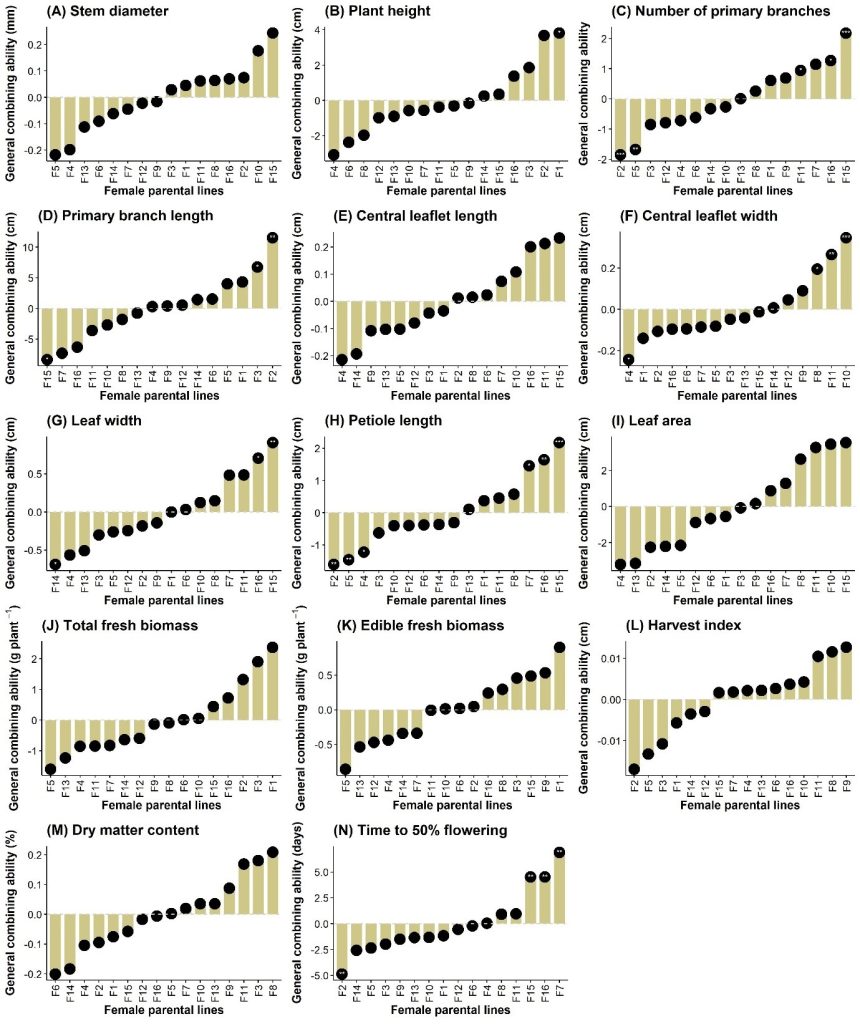
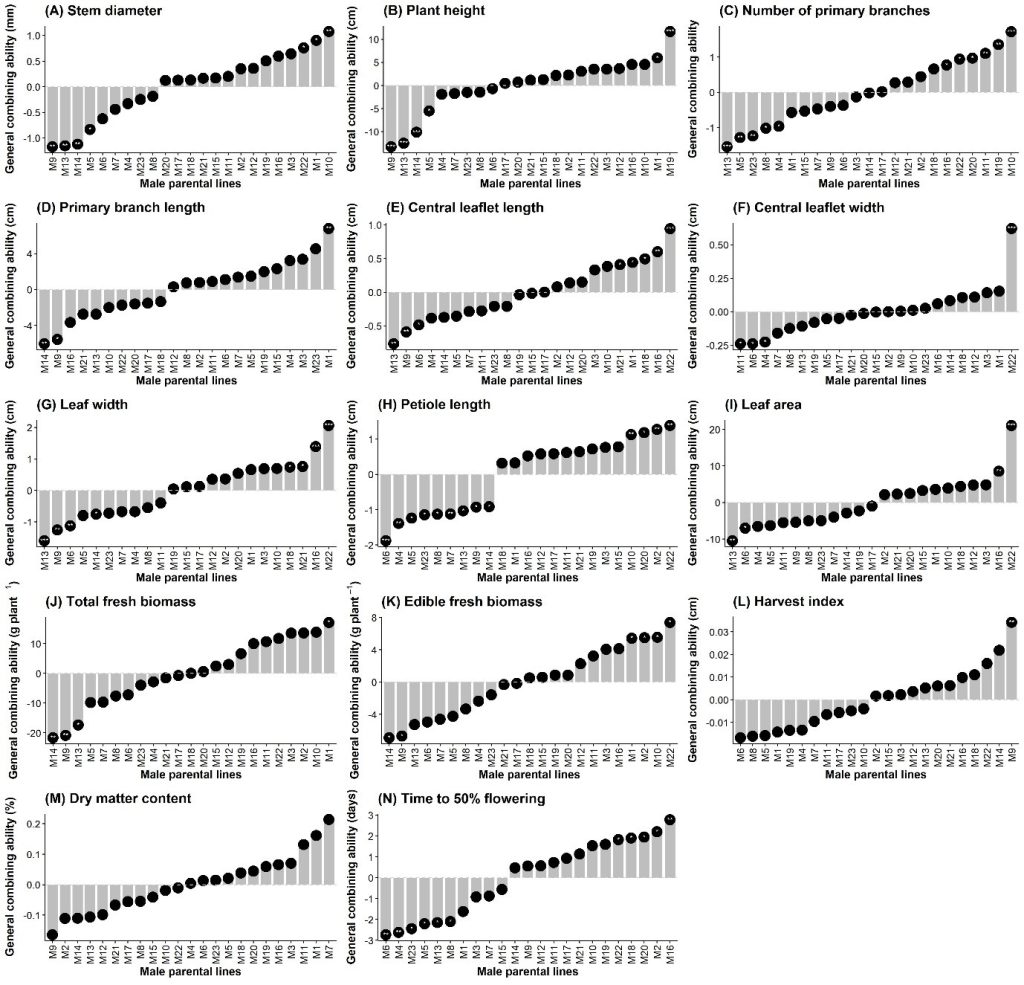
Significant differences (P < 0.05) were observed among and between hybrids and parents for all agronomic traits. Overall, hybrids performed better than their parents for stem diameter (21.1%), plant height (34.4%), primary branch length (37.6%), leaf traits (17.5–50.9%), total (80.6%) and edible (54.7%) fresh biomass. Significant general and specific combining ability (GCA and SCA) effects together with variance component analysis revealed that both additive and nonadditive gene action controlled biomass and related traits in the species with the predominance of additive gene action. The environment significantly interacted with genotype, GCA and SCA. Mid- and best-parent heterosis varied between − 51.7% and 192.1%. Specifically, only positive heterosis effects were observed for leaf area and total fresh biomass, with an average mid-parent heterosis greater than 50%. Parents with good GCA and crosses with high SCA and heterosis were identified. There were similar patterns of positive associations among plant height, stem diameter, leaf traits and plant biomass in both parents and hybrids. In contrast, there were significant changes from parents to hybrids in the association of harvest index and time to 50% flowering with biomass per plant and leaf traits on the one hand and between harvest index and dry matter content on the other hand.
The study thus revealed that reciprocal recurrent selection would be a sound breeding strategy for G. gynandra improvement with the development of hybrid cultivars to exploit heterosis. These findings contribute to the potential of using G. gynandra to decipher the genetic mechanism underlying heterosis in orphan leafy vegetables.