Mkpuma KC, Mwangi G, Kidaha M, Houdegbe AC, Njiru E, Ozimati AA, N’Danikou S, Oselebe H, Dinssa F, Abukutsa-Onyango M, Schafleitner R and Achigan-Dako EG (2026) Amaranth as an opportunity crop in Africa: drought–nutrient interactions and breeding perspectives for climate resilience. Front. Plant Sci. 17:1841633. https://doi.org/10.3389/fpls.2026.1841633
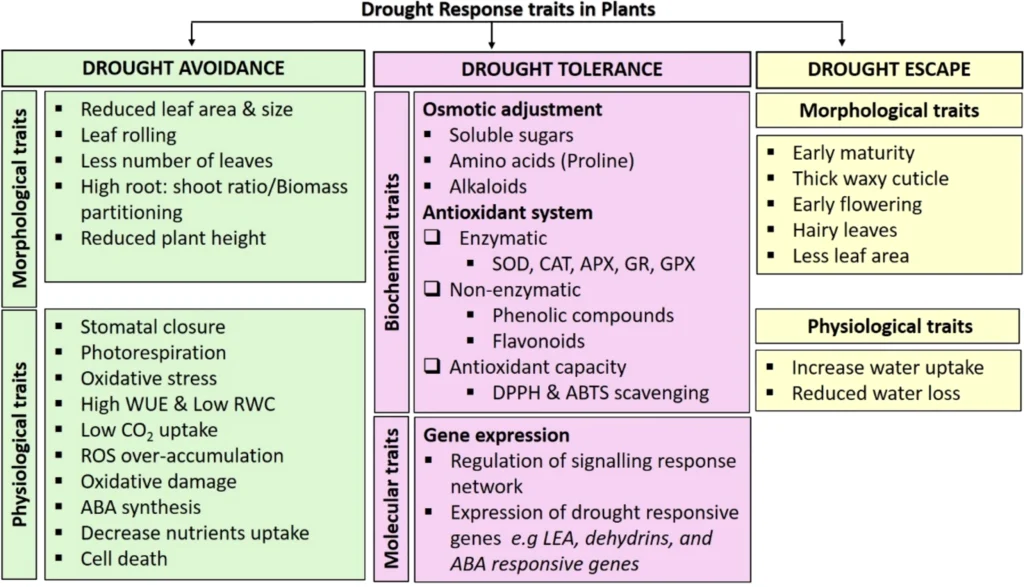
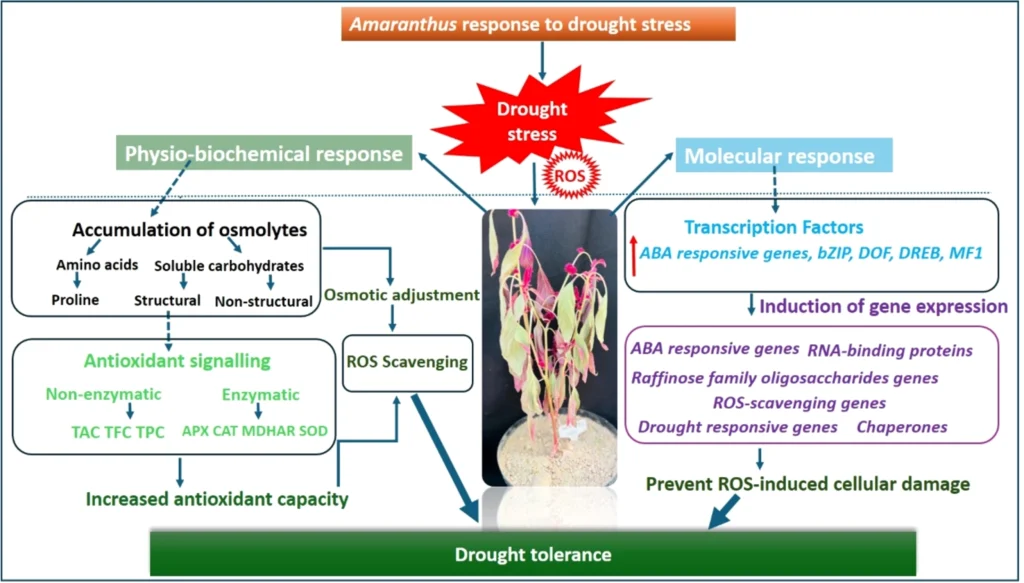
Amaranth (Amaranthus spp.) is increasingly recognized as a promising opportunity crop for improving food and nutritional security in sub-Saharan Africa under climate change. This review synthesizes current knowledge on amaranth utilization in Africa, with particular emphasis on how drought stress influences nutrient dynamics, yield, and quality, and the implications for breeding sustainable leafy vegetable systems. Evidence from both controlled and field studies indicates that moderate drought can enhance the accumulation of minerals, proteins, and secondary metabolites in leaves, whereas severe stress reduces growth, yield, and nutritional stability; in contrast, grain nutritional quality remains relatively stable under moderate water deficit. These responses are underpinned by coordinated morphological, physiological, biochemical, and molecular mechanisms, including osmotic adjustment, antioxidant defense, ABA-mediated gene regulation, and genotype-specific accumulation of protective proteins and osmolytes. The review further evaluates the feasibility of breeding for drought tolerance alongside stable nutrient composition, considering genetic diversity, trait heritability, and genotype × environment interactions. Findings suggest that environmental effects strongly influence nutrient-related traits, limiting the effectiveness of selection based solely on genetics. While breeding exclusively for nutritional traits may yield modest gains, integrating drought-resilient genotypes with water-efficient agronomic practices and improved value-chain management offers a more robust pathway. Overall, this review highlights key drought adaptation mechanisms in Amaranthus and underscores its potential as a climate-resilient crop for sustainable and affordable leafy vegetable production in sub-Saharan Africa.